Training
Why breathing is part of the training
A team: diaphragm and pelvic floor
The pelvic floor doesn't work alone. Together with the diaphragm – the large breathing muscle beneath the lungs – it forms the two ends of a shared space, often described as the "abdominal canister." Studies using ultrasound and muscle measurement (EMG) show that during calm breathing, the diaphragm and pelvic floor move in sync and in the same direction. The two muscles are functionally linked – what happens to one affects the other.
The shared rhythm
In detail: as you breathe in, the diaphragm lowers and the pelvic floor yields slightly and lengthens; as you breathe out, the diaphragm rises again and the pelvic floor lifts with it. So exhaling and a gentle lift of the pelvic floor naturally belong together. Once you know this rhythm, you can perform the exercise far more precisely: tighten on the exhale, release on the inhale.
Why it matters for training
This is where the practical benefit lies. Research suggests that diaphragmatic breathing combined with pelvic floor training makes conscious activation of the pelvic floor easier – calm, deep breathing helps you find the right muscle and engage it cleanly. There's also the calming effect: under stress, many people breathe shallowly into the chest or hold their breath. That raises baseline tension and makes control harder. A steady breathing rhythm counters this, lowers stress and relaxes the muscles.
What this means for your practice
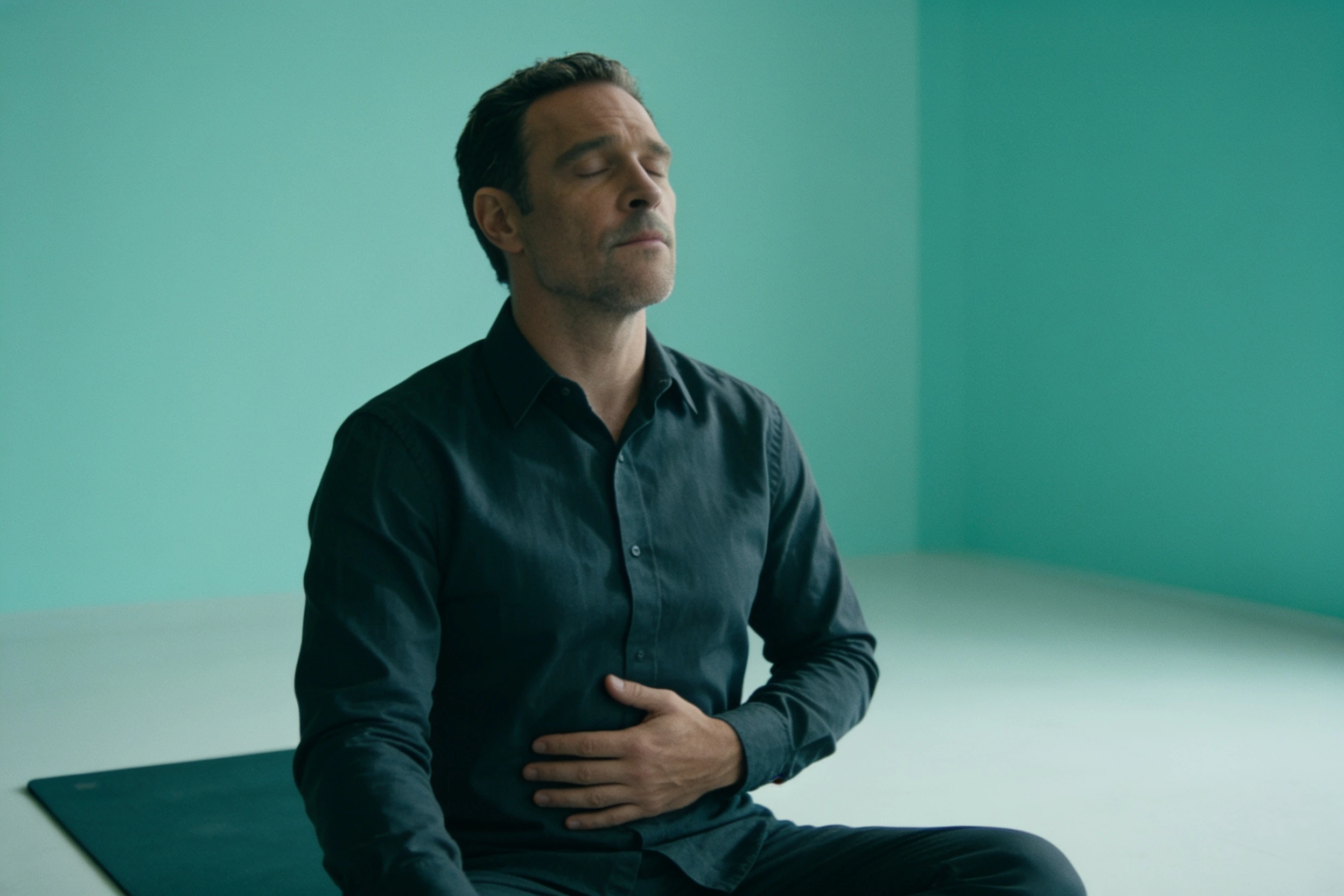
That's why breathing is not an add-on in the programme, but a foundation. Breathe calmly through your nose into your belly – the belly rises, the chest stays quiet. Don't hold your breath during training; let it flow. When you couple the pelvic floor exercise with your breath (lift on the exhale), you work with your body instead of against it.
This article is for information and does not replace medical advice.
Sources - Bordoni B., Zanier E.: Coordinated movement of the diaphragm and pelvic floor (literature review, EMG/MRI studies 2008–2018). - Korkmaz Dayican D. et al.: Exercise Position to Improve Synergy Between the Diaphragm and Pelvic Floor Muscles. Journal of Manipulative and Physiological Therapeutics, 2024.